
What a Net Zero Energy Home Costs in 2026
Last Updated: November 12, 2026
Quick Summary
A net zero energy home costs a stack of component decisions rather than one figure, with indicative 2026 ranges from $8,000-$25,000 for the envelope up to $9,000-$30,000 for solar and battery storage. Efficiency comes first, because every dollar spent on the envelope reduces the solar and heat-pump capacity you need.
- Envelope work at $8,000-$25,000 is the cheapest place to cut energy use.
- Heating and cooling runs $6,000-$18,000 and is sized down by a good envelope.
- Retrofits usually cost more than new builds because of discovery risk.
- Payback period equals net premium divided by annual saving.
- Ask every installer to itemise quotes by component, not as one lump sum.
Table of Contents
- What Drives the Cost of a Net Zero Energy Home in 2026
- Net Zero Energy Home Cost Breakdown by Component
- Net Zero Home Retrofit Cost: Upgrading an Existing House
- How a Home Energy Management System Changes the Numbers
- Working Out the Net Zero Home Payback Period
- Factors That Push Your Estimate Up or Down
- Building Your Own Estimate Before You Request a Quote
- Frequently Asked Questions
What Drives the Cost of a Net Zero Energy Home in 2026
A net zero energy home is a house that produces as much energy as it uses over a year, and its cost comes down to four things: how much energy the home wastes, how much it needs, how that energy is supplied, and how it is controlled. This guide from Cube Automation breaks down each part so you can build a realistic budget before you commit. The total is not one number. It is a stack of decisions, and each one changes the next.
Most homeowners search for a single figure. That figure does not exist, because two houses of the same size can land in very different places depending on insulation, glazing, system sizing and how the home is run day to day.
The premiums the research actually supports
Building to a higher energy standard usually costs more up front than a standard build. How much more depends on the design, the climate and the systems chosen.
Industry analysis collected by the Rocky Mountain Institute's work on zero-energy home costs points to a modest average premium for zero-energy construction rather than the large figures often quoted.
That is the frame to hold onto. A net zero energy home is judged on lifecycle cost, not on day-one price.
Net Zero Energy Home Cost Breakdown by Component
A net zero energy home cost breakdown splits into five buckets: the building envelope, heating and cooling, hot water, renewable supply, and controls. Each bucket has its own cost range, and each one affects the others. Costs depend on the property, labour rates, roof access and switchboard condition, so request a quote from Cube Automation on its website for current pricing for your home.
Here is how the buckets relate, with indicative ranges:
| Component | What it covers | Indicative 2026 cost range (AUD) | Effect on the rest of the budget |
|---|---|---|---|
| Envelope | Insulation, air sealing, windows | $8,000-$25,000 | Better envelope means smaller heating and solar systems |
| Heating and cooling | Heat pump, ductwork, zoning | $6,000-$18,000 | Sized down by a good envelope |
| Hot water | Heat pump hot water, efficient fixtures | $2,500-$6,000 | Lower running cost, smaller solar need |
| Renewable supply | Rooftop solar, battery storage | $9,000-$30,000 | Sized to the remaining load after efficiency |
| Controls | Home energy management system | $1,500-$6,000 | Ties the systems together and tracks performance |
Indicative 2026 cost range (AUD)
The order matters. Efficiency first, supply second, controls last. Homes that buy solar before fixing the envelope end up paying for panels to cover waste. A common pattern is that every dollar spent on envelope work reduces the required solar and heat-pump capacity, so the net premium is smaller than the sum of the line items.
Envelope, glazing and air sealing
The building envelope is the shell of the home: insulation, air sealing, windows and doors. It is the cheapest place to cut energy use, because every dollar spent here reduces the size of every system downstream.
A common mistake is treating windows as a finish choice. In practice, glazing drives heat gain and heat loss more than almost any other single element. High-performance windows and proper air sealing often let you specify a smaller heat pump and fewer panels.
Heating, cooling and hot water
Heating and cooling usually make up the largest share of a household's energy use, so the system choice carries the most weight. Heat pumps are the standard answer for a net zero home because they move heat rather than generate it.
Hot water follows the same logic. An efficient heat pump hot water system, paired with low-flow fixtures, reduces the load the solar system has to cover. Cube Automation's smart climate control page is a useful reference.
Renewable supply and controls
Controls are the smallest line but the one that determines how much of the generated energy is actually used on site rather than exported.
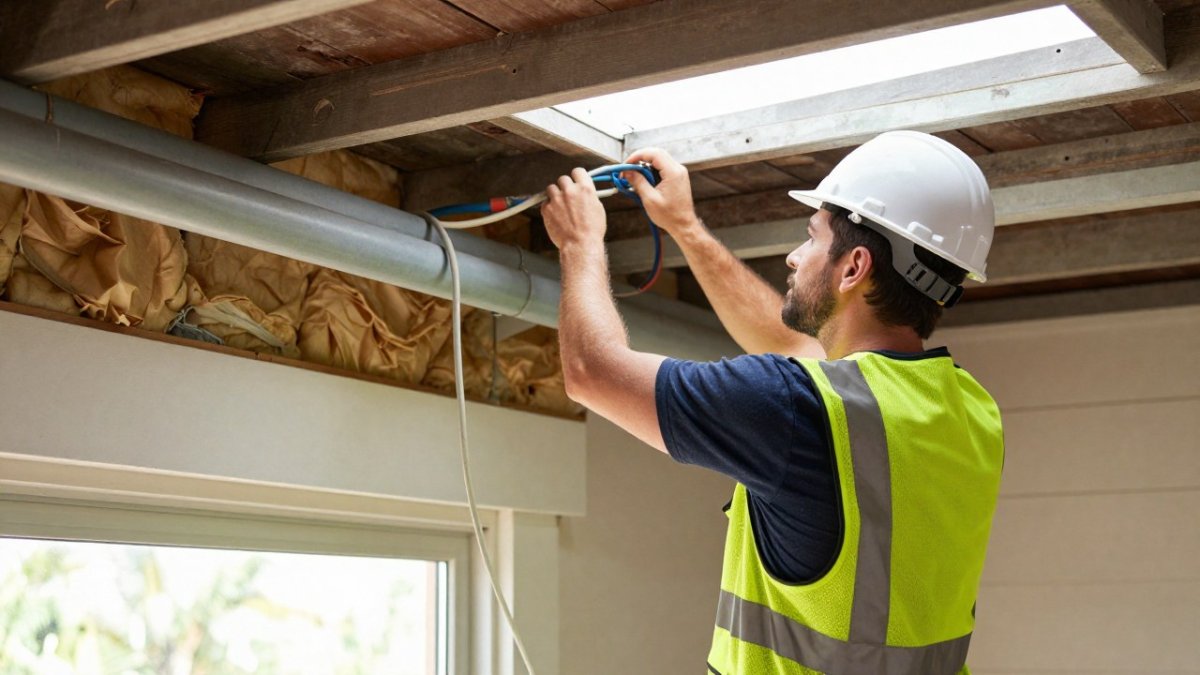
When you request quotes, ask each installer to break the price into these five buckets. A lump-sum quote hides which component is driving the total and makes it impossible to compare offers fairly.
Net Zero Home Retrofit Cost: Upgrading an Existing House
Net zero home retrofit cost is usually higher than a new build for the same outcome, because retrofits carry discovery risk.
Budget for three phases:
- Assessment: electrical capacity check, thermal review, and a plan for what stays.
- Envelope and services: insulation, draught sealing, glazing, and upgraded circuits.
- Supply and controls: solar, battery, and the management system that runs them.
Retrofits also suit staged delivery. Cube Automation's guide to retrofitting old homes for smart tech is a useful starting point for planning that work.
How a Home Energy Management System Changes the Numbers
A home energy management system is the control layer that decides when devices run, based on solar production, tariffs and household habits. It does not generate energy.
This is where the numbers move. A well-set system shifts big loads, such as hot water and pool pumps, into the hours when rooftop solar is producing. Battery storage then covers the evening peak.
System sizing still has to be right. Oversized solar with no storage exports cheaply and buys back expensively. See its battery storage and solar setup for more detail.
Working Out the Net Zero Home Payback Period
The net zero home payback period is the time it takes for energy savings to equal the extra you spent. To work it out, you need three inputs: the premium over a standard build, the annual energy bill saving, and the replacement and maintenance costs across the system's life.
The formula is simple:
Payback period (years) = Net premium ÷ Annual saving
Worked example using hypothetical figures, so you can see the method:
- Extra spent on efficiency, solar and controls: [your quoted premium]
- Annual energy bill reduction: [your modelled saving]
- Simple payback: premium ÷ annual saving
That is the simple version. It ignores two things that change the answer materially: replacement cycles and tariff movement.
Replacement cycles and lifecycle cost
A battery and inverter may need replacing during the system life, which lengthens the simple payback period. A lifecycle cost calculation spreads those replacements across the system life and compares the total against the avoided energy bills.
Sensitivity: what moves the number
Stress-test the payback against three variables:
- Tariff movement: if retail electricity rises faster than the export credit, self-consumption becomes more valuable and payback shortens.
- Electric vehicle adoption: adding an EV raises household consumption and the share of solar used on site, which shortens payback.
- Battery replacement timing: a battery that fails early lengthens payback; one that lasts 15 years shortens it.
Run the calculation three times with low, central and high assumptions for each variable. If the project still pays back within the system life under the low case, it is robust. If it only works under the high case, it is a bet on tariffs rather than an efficiency investment.
Lifecycle cost, not simple payback, is the number that decides whether the project stacks up. Ask every installer for the assumed replacement schedule and the tariff assumption behind their savings figure, then check those assumptions against your own bills.
Factors That Push Your Estimate Up or Down
Climate zone is the biggest single variable. A home in a hot climate leans on cooling and shading, while a cooler climate leans on insulation and heating. Neither is automatically cheaper.
Other swing factors:
- Roof orientation and shading: a shaded roof needs more panels or none at all.
- Electrical capacity: older switchboards may need upgrading before solar or controls can be added.
- Home size and layout: more floor area means more envelope and bigger systems.
- Staging: spreading work over time reduces cash flow pressure but adds mobilisation cost.
- Government incentives and funding: schemes change, so check current eligibility with the relevant agency before you build a budget around them.
Watch out: sizing solar before the envelope work is finished is the most common and most expensive sequencing error. You end up paying for production to cover waste you could have removed.
Building Your Own Estimate Before You Request a Quote
Build your own estimate first, then use it to test every quote you receive. A quote you cannot interrogate is a quote you cannot compare.
Use this checklist:
- Confirm your home's electrical capacity before planning any upgrades
- List the envelope work: insulation, draught sealing, glazing
- Note the age and condition of the heating, cooling and hot water systems
- Estimate roof space, orientation and shading for solar
- Decide whether battery storage is in scope now or later
- Separate new-build costs from retrofit costs in your budget
- Ask every installer to itemise by component, not as one lump sum
If you are unsure whether your property can support the systems you want, start with a capacity check. Cube Automation's guide on assessing home electrical capacity is a useful reference. When your scope is clear, you can request a quote for the automation and efficiency work.
The gap between a good net zero outcome and an expensive one usually comes down to sequencing: efficiency first, then supply, then controls.
Frequently Asked Questions
How much more does a net zero energy home cost than a standard home?
Published figures put the premium in a wide band rather than a single number. The Rocky Mountain Institute reports average incremental construction costs of 7.3% for zero-energy homes across four zones, while the New Buildings Institute found energy-efficiency premiums of roughly 1-12% and net-zero-energy premiums of 5-19% depending on building type. Neither study gives an Australian-specific estimate, so treat these as directional. Your actual premium depends on climate zone, block orientation, glazing ratios and how much solar and battery capacity you size for.
Is it cheaper to build a net zero home or retrofit an existing one?
A new build is usually the lower-cost path to net zero because insulation, air sealing and services can be designed in from the start. Retrofitting means working around existing framing, old wiring and finished surfaces, which adds labour. The net zero home retrofit cost also climbs when switchboards, cabling or roof structure need upgrading before solar and battery storage go on. Get a condition assessment first: it tells you whether the building envelope and electrical infrastructure can carry the load before you commit to a budget.
How can I estimate the payback period for a net zero energy home?
Start with the gap between your modelled annual energy bills and your expected post-upgrade bills, then divide the upfront premium by that annual saving. A net zero home payback period typically runs longer than a solar-only payback because you are funding envelope and heating work as well as generation. Run the calculation at two or three electricity price assumptions, since the result is sensitive to utility rates. Ask for modelled annual consumption and production figures in writing so the payback maths rests on documented numbers rather than a sales estimate.
Can a home energy management system reduce a home's energy use and costs?
A home energy management system coordinates the big loads, such as heat pumps, hot water, pool pumps and electric vehicle charging, so they run when rooftop solar production is highest or when tariffs are lowest. It does not shrink the building envelope's heat loss, so pair it with insulation and air sealing rather than treating it as a substitute. The practical gains come from shifting and trimming consumption, which shows up in your bills and in how much battery capacity you need to buy.
