
Residential Electrical Infrastructure Upgrade Cost in 2026
Last Updated: November 7, 2026
Quick Summary
A residential electrical infrastructure upgrade cost depends mainly on scope, covering the switchboard, consumer mains and downstream circuits. The four switchboard tiers range from like-for-like replacement to full capacity upgrades, and hidden defects in existing wiring are the largest variable. Compare quotes only when they describe the same scope.
- Plan the whole upgrade as one scope, since changes to one part often affect the others.
- List every load expected over the next five to ten years before requesting quotes.
- Switchboard work falls into four tiers, from like-for-like replacement to broader capacity upgrades.
- Existing wiring condition is the single largest variable in switchboard pricing.
- Confirm whether service-line, meter and network coordination are included before comparing consumer mains quotes.
Table of Contents
- What a Residential Electrical Infrastructure Upgrade Involves
- Switchboard Upgrade Cost by Scope and Complexity
- Consumer Mains Upgrade Cost and Service-Line Considerations
- Cost Scenarios by Home Type and Project Trigger
- How to Compare a Residential Electrical Upgrade Quote Like for Like
- Home Electrical Upgrade Timeline From Assessment to Completion
- Planning Your Upgrade Around Solar, Batteries and EV Charging
- Frequently Asked Questions
What a Residential Electrical Infrastructure Upgrade Involves
A residential electrical infrastructure upgrade is the work of bringing a home's supply, switchboard and circuits up to the capacity the household now needs. It usually covers the switchboard, the consumer mains that feed it, and the wiring and protective devices downstream. A change to one part of the electrical system often affects the others, so it is worth planning the work as one scope rather than separate jobs.
The reason to plan the whole upgrade at once is that older homes were wired for far lower loads than today's appliances, solar systems, batteries and EV chargers draw. Adding one device without checking the rest can leave the house under-supplied or force a second visit later. Pricing depends on the scope of work, so the scope described here is the main thing to get right before comparing quotes.
Start the residential electrical infrastructure upgrade cost assessment by listing every load you expect to run in the next five to ten years, not just today's. That list is what determines whether the existing supply and switchboard can carry the home without a larger upgrade.
Switchboard Upgrade Cost by Scope and Complexity
The cost of a switchboard upgrade is driven by how much of the board is replaced, how many circuits it must carry, and what has to be corrected around it.
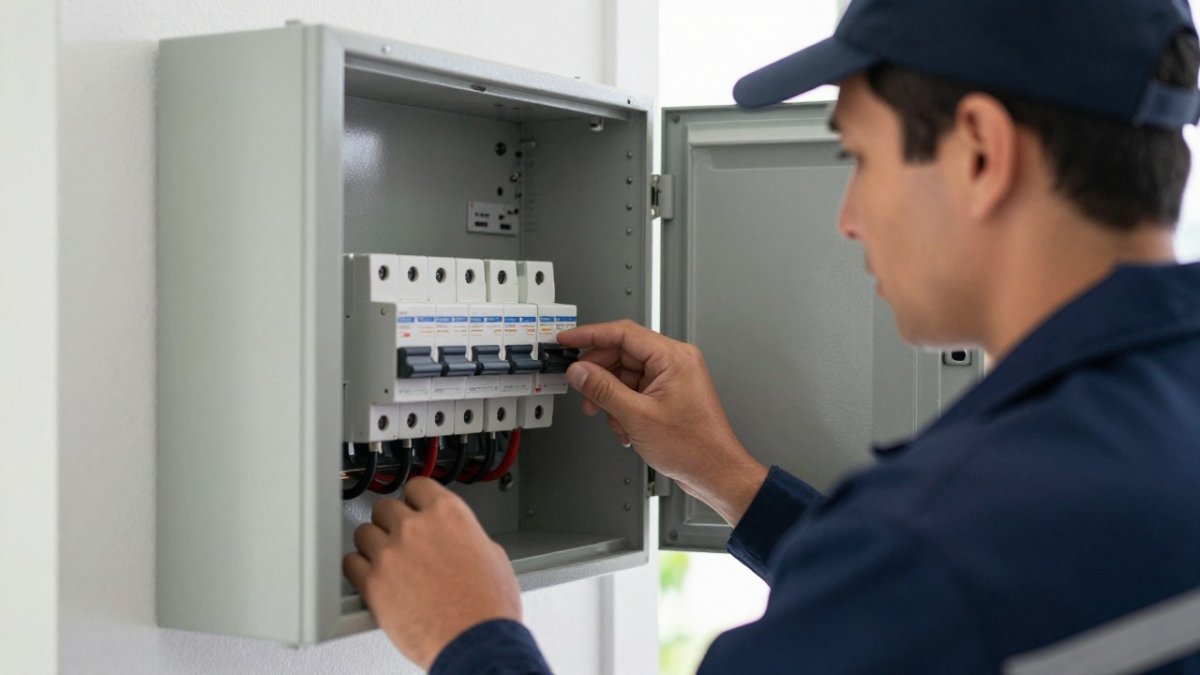
Tier 1, like-for-like board replacement. The existing board is removed and a new enclosure with the same number of ways is fitted, with the existing circuits re-terminated.
Tier 2, board replacement with circuit additions and protection upgrades. The new board has spare ways, safety switches (RCDs) are fitted to the required circuits, and surge protection is added.
Tier 3, board replacement with defect rectification. Older fuse boxes and early circuit-breaker boards often hide defects that only appear once the cover is off: deteriorated insulation, borrowed neutrals, undersized circuit conductors, or circuits with no earth.
Tier 4, board replacement as part of a broader capacity upgrade. Where the home is adding solar, a battery, an EV charger or a large air conditioning load, the board must be sized for the final load, not the current one.
Several specific items move a quote between tiers:
- Number of circuits and ways. A board with 12 ways costs less in materials and labour than a 24-way board, but the difference is modest compared with the cost of opening walls to run new circuits.
- Safety switches and circuit breakers. Fitting RCD protection to every circuit, rather than only the required circuits, adds devices and labour but reduces future call-outs.
- Surge protection. A surge protective device at the board is a small line item that protects sensitive electronics and is increasingly expected in new installations.
- Existing wiring condition. This is the single largest variable. Circuits that need re-termination, new cable, or an earth added can double the labour on an otherwise simple board swap.
- Access and making good. A board in a tight cupboard, a brick wall that must be made good, or a board that must be relocated all add time.
Watch out: a quote that prices only the board and devices, without stating how existing-circuit defects will be handled, is the most common source of variations once work begins. Ask for the defect policy in writing before accepting.
A practical way to compare quotes is to ask each electrician to state which tier their price assumes and what would move the job to the next tier.
The four scope tiers below summarise what each level of switchboard work involves and what drives its cost.
| Tier | Scope | Main cost driver |
|---|---|---|
| Tier 1 | Like-for-like board replacement | Isolation, re-termination and testing |
| Tier 2 | Board replacement with circuit additions and protection upgrades | Number of ways and RCD groups |
| Tier 3 | Board replacement with defect rectification | Hidden defects in existing wiring |
| Tier 4 | Board replacement as part of a broader capacity upgrade | Final load sizing and mains coordination |
Consumer Mains Upgrade Cost and Service-Line Considerations
The consumer mains are the cables that carry electricity from the network connection point to the switchboard. They are sized for the maximum demand of the installation, and when a home adds a large load, an EV charger, a ducted air conditioner, a battery or a workshop, the existing mains can become the limiting factor even if the switchboard has spare capacity.
When consumer mains typically need upgrading. The trigger is usually one of four things: a new load that pushes maximum demand beyond the rating of the existing mains; deterioration of the existing cable, particularly older rubber-insulated or undersized conductors; a move from overhead to underground supply; or a switchboard relocation that changes the cable route. An electrician confirms the need by calculating maximum demand against the mains rating, not by guessing from the size of the house.
The parties involved. Service-line work is not always the homeowner's electrician's job. The network connection point, the service line from the street, and the meter are typically the responsibility of the electricity distributor, while the consumer mains from the connection point to the board are the customer's responsibility. In many cases the work must be carried out or coordinated by an accredited service provider (often called a Level 2 electrician) rather than a general electrical contractor.
What changes the price. The main cost drivers are:
- Underground versus overhead supply. Underground consumer mains require trenching, conduit and reinstatement, which adds significant labour and site work compared with an overhead run.
- Distance from the connection point to the board. A long run needs more cable and more labour, and may need a larger conductor to manage voltage drop.
- Access and site conditions. Concrete, paving, established gardens, asbestos-containing materials and restricted access all add time and cost.
- Network coordination and outages. Work that requires the distributor to isolate or reconnect the supply must be scheduled, and outage windows can extend the timeline.
- Metering changes. A mains upgrade sometimes triggers a meter replacement or reconfiguration, which is arranged through the retailer or distributor and adds a separate step.
Watch out: quotes that do not state whether the service line, meter and network coordination are included are not comparable. A cheaper quote that stops at the connection point can end up costing more once the distributor's portion is added.
How to compare consumer mains quotes. Ask each quote to state four things: the rating and route of the new mains, whether the service line is included, who is coordinating the network connection and any outage, and what testing and certification will be provided at completion. Where the work crosses the customer/distributor boundary, ask for the accredited service provider's details and confirm they are authorised for that network. A quote that answers all four is far easier to hold to than one that describes the cable only.
Planning the mains and the switchboard together is the practical takeaway. If the mains are likely to need upgrading within the life of the new board, sizing both for the final load now avoids paying for the same access, isolation and coordination twice.
Cost Scenarios by Home Type and Project Trigger
The same upgrade costs different amounts depending on the home and the reason for the work. A single-storey house with a recent board needs less than an older double-storey home being rewired. Renovations that open walls expose more wiring, which adds labour and materials.
Common triggers include adding solar and a battery, installing an EV charger, extending the home, or simply replacing an ageing board. Each trigger brings a different set of required changes, so the scenario should be matched to the project's actual reason rather than to a generic average.
A site visit is the most reliable way to understand the likely scope and cost for your home.
How to Compare a Residential Electrical Upgrade Quote Like for Like
Comparing quotes only works when each one describes the same scope. To judge whether your home's existing capacity supports the proposed work, read how to assess home electrical capacity. Check that every quote lists the switchboard, mains and any service-line work, the number of circuits and protection devices, the materials, testing and certification, and whether the price includes the electrician's call-out.
A simple comparison table helps. List the scope items down the side, put each quote in its own column, and mark what is included, excluded or unclear. Gaps in that table show where one quote is cheaper only because it does less.
Be cautious about very low quotes that leave out testing, certification or existing-wiring repairs. These items often return as variations after the work starts. Itemised quotes allow each element to be checked against the others.
Home Electrical Upgrade Timeline From Assessment to Completion
A typical project moves through a site assessment, a written scope and quote, scheduling, the installation itself, testing and final documentation. The assessment is the stage most often rushed, and it is the one that prevents the most later changes.
Timelines vary with the size of the scope, the need for service-line work and how far ahead the trades can be booked. Where work must be coordinated with a renovation, agree the sequence early so the electrical rough-in happens before walls are closed.
Ask for a written timeline with each stage named. A quote without one is harder to hold a contractor to.
Planning Your Upgrade Around Solar, Batteries and EV Charging
Solar, batteries and EV chargers all draw on the same supply and switchboard, so planning them together avoids paying twice for capacity. Planning for net-zero energy goals means sizing the switchboard and mains for the solar, battery and charging load you expect, not only the load you have today.
If the home will add these over time, plan the switchboard and mains for the final load now and stage the devices later. This is often cheaper than upgrading twice. Electrical work can also be coordinated with smart lighting, climate and CCTV systems in the same project.
If you want a scope checked against your home and the systems you are planning, contact Cube Automation for an assessment. You can also review the residential EV charger options and the rooftop solar and battery storage offering to plan them alongside the upgrade.
Frequently Asked Questions
How much does a residential electrical infrastructure upgrade cost?
The cost depends on the scope of work, the age and condition of the existing system, and how much of the home is affected. A switchboard-only replacement sits at the lower end, while a consumer mains upgrade, service-line work or whole-home rewiring costs considerably more. Pricing depends on the property, so request a site assessment and a written quote itemised by scope to get an accurate figure for your home.
What affects the cost of a switchboard upgrade?
The main drivers are the number of circuits, whether the existing board is a fuse box or older switchboard, the need for modern safety switches and circuit breakers, and how easily the board can be accessed. Additional work such as earthing upgrades, compliance corrections for existing defects, or extra space for solar and EV circuits also affects the total. Ask each quote to list these items separately so you can see what is included.
Do I need an electrical upgrade before adding solar, a battery or an EV charger?
Not always, but a switchboard may need capacity or protective device changes before new loads are connected. A licensed electrician can assess the existing supply and board to confirm what is required. Solar, battery and EV charger installations can be planned together so the electrical work supports the whole system from the outset.
How long does a residential electrical upgrade take?
Timelines vary with scope, site access and whether network provider work is required. Assessment and quoting usually come first, followed by scheduling, the installation itself and testing and certification. Smaller switchboard work can often be completed in a single day, while larger projects involving multiple trades take longer. Confirm the expected timeline in writing when you receive your quote.
