Smart Home Installers on the Gold Coast: A 2026 Guide
Table of Contents
- What to Look for in a Smart Home Installer
- Key Services Smart Home Installers Offer
- Smart Home Installation Cost: What Affects Your Quote
- Smart Home Systems for Renovations
- Smart Home Installer Questions to Ask Before Hiring
- Why Credentials, Licensing and Local Expertise Matter
- Making Your Decision
- Frequently Asked Questions
Last Updated: October 5, 2026
What to Look for in a Smart Home Installer
Choosing the right smart home installers gold coast means evaluating more than price. The best combine technical expertise with an understanding of how your home's existing systems integrate with new automation, and communicate honestly about what's realistic within your budget and timeline.
Look for installers who assess your needs before quoting: security priorities, energy efficiency goals, and existing devices, since incompatible systems create frustration later.
Credentials matter. Licensed electricians bring accountability, insurance protection, ongoing support, warranty coverage, and knowledge of local electrical codes that casual handymen cannot offer.
Key Services Smart Home Installers Offer
Professional smart home installers offer services well beyond plugging in devices. Understanding what's available helps you plan a comprehensive system rather than piecemeal upgrades that create compatibility headaches.
CCTV and home camera systems
CCTV installation forms the security backbone of most residential automation projects. Installers design systems that cover blind spots, account for lighting conditions, and keep footage accessible.
The installer should discuss cloud versus local storage, assess your internet bandwidth, and recommend cameras suited to your connectivity. Poor installation leaves cameras dropping offline or failing to record during critical moments.
Smart doorbells and access control
Smart doorbells and connected locks are your first line of defence. They need reliable power, strong network signals, and integration with your security system, so a professional installer ensures adequate wiring, tests video quality, and configures permissions.
Access control systems require thoughtful planning: who needs access, how often codes change, and what happens if someone loses a key. Integration with your phone and alarm system matters too.
Lighting and climate control integration
Smart lighting and climate control transform daily life. Integrated systems respond to time, occupancy, and your preferences, and installers design them to work together so your heating doesn't fight your air conditioning.
This requires understanding your home's layout, insulation, window placement, and existing HVAC configuration, so a competent installer asks detailed questions about comfort and energy priorities before designing the system.
Smart Home Installation Cost: What Affects Your Quote
Most quote comparisons fail because buyers compare a single number instead of the scope behind it. Two installers can quote the same job at very different figures and both be fair, one pricing a like-for-like swap of a customer-supplied device, the other a designed, commissioned, warrantied system with network remediation and aftercare.
The main cost drivers
1. Labour hours versus device count. Labour is usually the largest line item, scaling with complexity rather than box count.
2. Whether equipment is supplied or customer-supplied. Supply-and-install quotes bundle device, margin, and warranty into one figure, if a device fails, the installer owns the fix.
3. Electrical infrastructure and access. Older homes often need new circuits, power points, or a switchboard upgrade before smart devices can be installed safely.
4. Network and cabling. A reliable smart home needs reliable Wi-Fi and, for many systems, structured cabling.
5. Integration and commissioning. Connecting new devices to an existing ecosystem, a hub, app, voice assistant, or alarm panel, takes longer than installing a fresh system.
6. Aftercare and support terms. Some installers include a defined support period; others charge per visit from day one.
How to read a quote
A well-structured quote usually separates:
- Design and site assessment, sometimes free, sometimes a paid consultation that is credited against the job.
- Equipment, itemised by device, with model numbers so you can verify compatibility and compare like-for-like.
- Labour, estimated hours and hourly rate, or a fixed installation fee.
- Cabling and electrical works, called out separately from device installation.
- Commissioning and training, the time spent configuring scenes, apps, and handover.
- Warranty and support, what is covered, for how long, and how to lodge a call.
Indicative cost patterns
Exact pricing depends on your property, ecosystem, and the installer's rates. What you can reasonably expect:
- A single-device installation (one doorbell, one camera, one smart switch) sits at the low end of the scale and is often priced as a minimum call-out plus parts.
- A room-level package (lighting plus climate plus a couple of cameras) sits in the middle and typically includes some network work.
- A whole-home automation project, lighting, climate, blinds, audio, security, and energy monitoring, is priced as a designed system and is quoted after a site assessment, not over the phone.
If an installer gives you a firm whole-home price without visiting the property or asking detailed questions, that is a warning sign, not a bargain.
Questions that expose a vague quote
- Which devices, by model number, are included?
- How many labour hours are allowed, and what is the rate if the job runs over?
- Is network cabling or Wi-Fi remediation included?
- What is the support period, and what does a call-out cost after it ends?
- If a device fails in year two, who pays for the replacement and the labour?
A quote that answers these clearly is easier to compare, and usually easier to trust, than the cheapest number on the page.
Smart Home Systems for Renovations
Major renovations offer the ideal opportunity to integrate smart home systems comprehensively. Rather than retrofitting devices into walls and ceilings, you can plan wiring runs, power locations, and network infrastructure during construction, costing less and delivering better results.
During renovation planning, discuss automation goals with both your builder and your smart home installer. They should coordinate so electrical runs accommodate future devices, network cabling reaches all necessary areas, and power is available where needed.
Renovations also let you address underlying issues, old wiring, network coverage, backup power, alongside your smart home installation, far more efficient than layering upgrades on piece by piece.
Smart Home Installer Questions to Ask Before Hiring
Before committing to any installer, ask these questions. Their answers reveal whether they understand your needs and can deliver reliable results.
Ask about their experience with systems like yours, whole-home automation or individual devices? Request references from recent Gold Coast projects; local experience matters because installers familiar with regional electrical codes and climate anticipate issues others miss.
Clarify what happens after installation: training, call-backs if something stops working, and what warranty covers their work versus equipment. Ask whether they troubleshoot remotely or must visit.
Discuss compatibility: if you already own smart devices, can their system integrate them or must you replace everything? Ask how they handle future upgrades and whether your system can grow.
| Question | Why It Matters | What to Listen For |
|---|---|---|
| What's your experience with whole-home automation? | Reveals expertise level | Specific project examples, years in business |
| Can you integrate my existing devices? | Determines if you start fresh or build on what you have | Clear explanation of compatibility, honest limitations |
| What's included in your warranty? | Protects you if something fails | Specific timeframe, what's covered, support terms |
| How do you handle system updates and maintenance? | Ensures your system stays secure and functional | Proactive monitoring, regular check-ins, security patches |
| What's your process if something fails after installation? | Determines your recourse if problems arise | Response time, remote vs. on-site support, cost |
Why Credentials, Licensing and Local Expertise Matter
Electrical work carries genuine risk, and in Australia it is regulated for good reason. Unlicensed work can void your home insurance, fail a safety inspection, and create liability if a future owner or tenant is injured. For smart home installations the risk is compounded because low-voltage devices are often wired into mains circuits, and a poorly installed system can fail silently long after the installer has been paid.
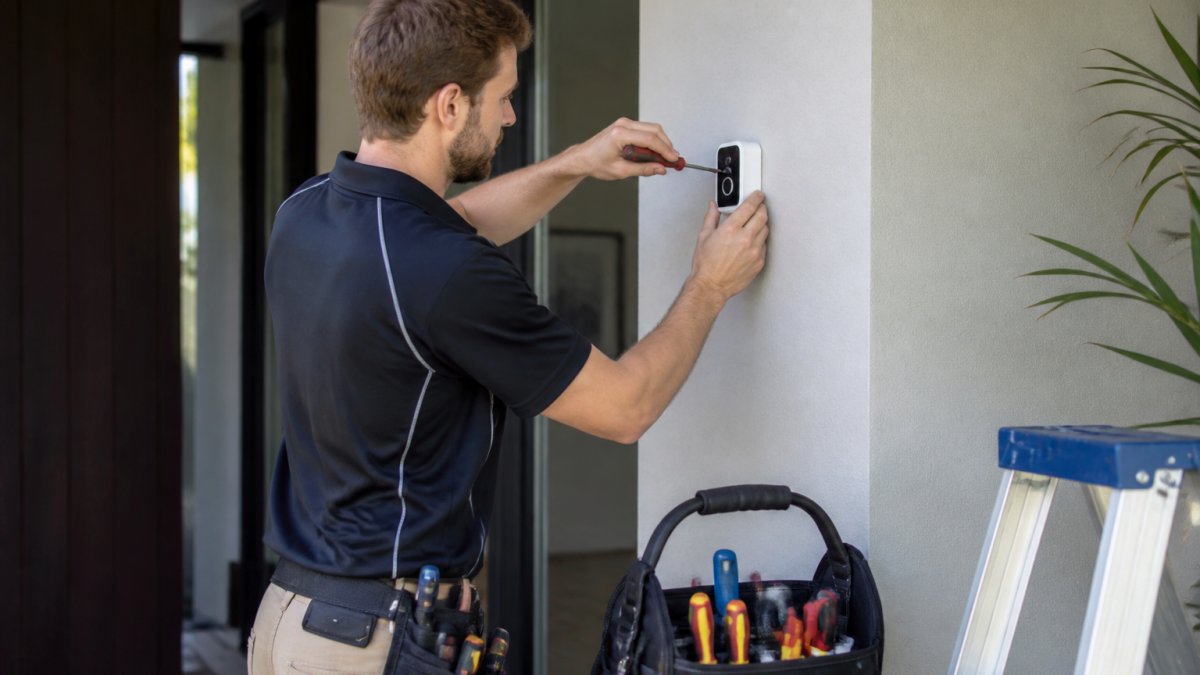
Credentials separate an accountable professional from a handyman with a drill and a YouTube playlist.
What to verify before you sign
1. Electrical licensing. In Australia, electrical work must be carried out by a licensed electrician, with the licence issued by the state or territory regulator.
2. Insurance. Ask for a certificate of currency for public liability insurance and, where they employ staff, workers compensation.
3. Manufacturer certifications and training. Many smart home ecosystems run accredited installer programs, meaning product-specific training and often the ability to register extended warranties on your behalf.
**4.
5. Warranty terms in writing. Distinguish the manufacturer's warranty on the device from the installer's workmanship warranty on the installation.
6. References and site visits. Ask for two or three recent local projects you can contact, ideally with similar scope.
Why local knowledge still matters
Credentials prove competence; local experience proves judgement. Installers who work regularly in the region understand conditions affecting equipment longevity, coastal salt air accelerating corrosion on outdoor cameras and locks, humidity affecting enclosures, and broadband quality varying between suburbs. They also know common local building styles, shortening assessment and reducing surprises on installation day.
That knowledge shows up in small decisions: marine-grade fixings for exposed positions, cameras rated for the local climate, or a network topology that survives typical local outages, the difference between a system that works on handover day and one that still works in three years.
A practical vetting checklist
Before you commit, confirm each of the following in writing:
- Electrical licence number provided and verified against the public register
- Certificate of currency for public liability insurance sighted
- Workers compensation coverage confirmed (if they employ staff)
- Manufacturer accreditations listed for your chosen ecosystem
- Workmanship warranty stated, with length and claim process
- Manufacturer warranties explained, including who registers them
- Two or three recent local references offered
- Written quote itemising labour, equipment, cabling, and commissioning
- Support period and post-support call-out rates stated
- Data handling and account security practices explained
Making Your Decision
After gathering quotes, evaluate holistically. The cheapest option rarely delivers the best result, so weigh the installer's expertise, communication style, proposal comprehensiveness, and after-installation support.
At Cube Automation, our licensed team designs systems tailored to your home, whether you're integrating CCTV, automating lighting and climate control, or planning a whole-home system during renovation, handling everything from initial assessment through ongoing support.
Choose an installer who listens to your goals, explains their approach clearly, and stands behind their work. The right professional relationship pays dividends through years of reliable operation.
Finding the right smart home installers gold coast requires balancing technical capability, local expertise, and genuine support. A licensed professional who understands your home and goals, communicates transparently about costs and timelines, and provides ongoing support will deliver results that justify the investment.
Frequently Asked Questions
What should I ask a smart home installer before hiring them?
Ask about their licensing, insurance, and experience with your specific devices or systems. Confirm whether they supply equipment or work with customer-supplied gear. Request references from recent projects, ask about warranty coverage and post-installation support, and clarify their timeline and availability. A reputable installer will answer all these questions directly and provide a detailed quote that breaks down labour and materials.
How much does smart home installation cost?
Smart home installation cost depends on the scope of work, number of devices, complexity of integration, and whether you need new wiring or modifications to existing infrastructure. A simple doorbell installation differs vastly from a whole-home automation system integrating security, lighting, climate control, and solar. Get quotes from multiple installers that itemise labour, equipment, and any structural work required. Transparent quotes help you compare value fairly.
Can smart home systems be integrated into an existing house during renovation?
Yes. Renovations are an ideal time to plan smart home systems because walls are open and wiring can be run without major disruption. During planning, discuss your automation goals with your installer early so electrical work can be coordinated. Existing homes may require additional cabling or network upgrades, but professional installers assess this during a site visit and advise on feasibility and costs before work begins.
Do I need a licensed electrician to install smart home devices?
Many smart home devices can be installed by homeowners, but any work involving mains power, new circuits, or structural modifications must be done by a licensed electrician to comply with safety standards and building codes. A qualified installer ensures your system is safe, reliable, and meets local electrical requirements. They also handle integration with existing wiring and systems, which typically requires professional expertise.