5 Best Energy Monitoring Systems for Homes in 2026
Last Updated: November 26, 2026
Quick Summary
The five best energy monitoring systems for homes in 2026 are Cube Automation, Emporia Vue 3, Sense Solar, Smappee and the Kasa KP115, each suited to a different household setup. Energy monitoring systems track how much electricity a home uses, when it uses it and which circuits or appliances draw the most power.
- Choose circuit-level monitoring if your main question is why your bill is so high.
- The Emporia Vue 3 uses CT clamp sensors on individual circuits for per-circuit tracking.
- Sense Solar separates solar generation from grid electricity for solar households.
- The Kasa KP115 is a smart plug that tracks single appliances like fridges and dryers.
- Whole-home and circuit-level systems need a licensed electrician working inside the switchboard.
Table of Contents
- What are the 5 best energy monitoring systems for homes?
- 1. Cube Automation: Integrated whole-home and solar monitoring
- 2. Emporia Vue 3: Best for circuit-level detail
- 3. Sense Solar: Best solar energy monitoring system
- 4. Smappee: Best whole-home energy monitor for smart homes
- 5. Kasa KP115: Best plug-in energy monitor for appliances
- Energy monitoring system installation: What to expect
- Choosing the right energy monitoring system for your home
- Frequently Asked Questions
What are the 5 best energy monitoring systems for homes?
The five best energy monitoring systems for homes in 2026 are Cube Automation, Emporia Vue 3, Sense Solar, Smappee and the Kasa KP115, each suited to a different household setup. Energy monitoring systems are devices and platforms that track how much electricity a home uses, when it uses it and which circuits or appliances draw the most power. At Cube Automation, we install and integrate these systems as part of wider smart home and electrical work.
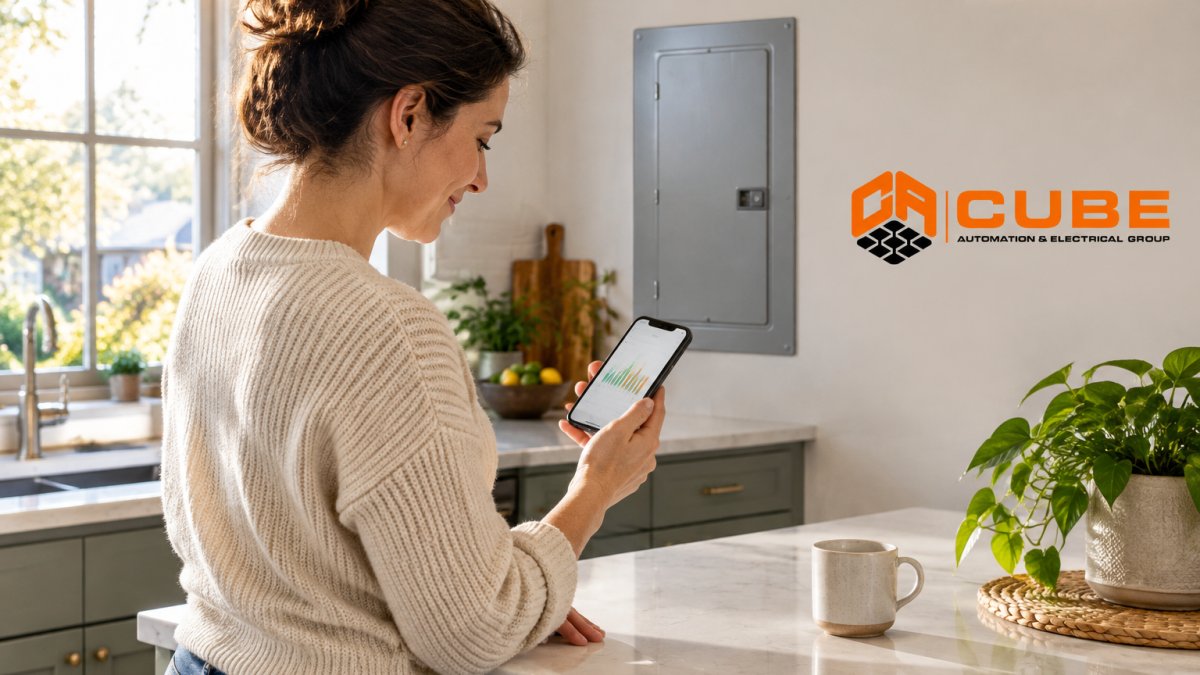
The right pick depends on what you want to see. Whole-home monitoring shows total consumption. Circuit-level monitoring breaks it down by electrical circuit. Plug-in monitors track single appliances. Solar households need a unit that reads generation and grid electricity separately.
Comparison table: features and best use cases
| System | Monitoring type | Best for | Standout strength |
|---|---|---|---|
| Cube Automation | Whole-home, solar, integrated | Renovations and full smart home builds | Licensed installation and system integration |
| Emporia Vue 3 | Circuit-level | Detailed per-circuit tracking | Multiple circuit sensors |
| Sense Solar | Solar and grid | Homes with solar generation | Solar generation visibility |
| Smappee | Whole-home | Smart home integration | Works alongside connected devices |
| Kasa KP115 | Plug-in | Individual appliances | Simple plug-in setup |
1. Cube Automation: Integrated whole-home and solar monitoring
Our top pick is Cube Automation because it treats monitoring as part of the whole electrical and automation system, not a gadget bolted on afterwards. Our team of licensed electricians handles design, installation and maintenance.
Best for: homeowners planning a renovation or new build who want monitoring integrated with solar, battery and smart home systems. Skip if: you only want a cheap plug-in device for one appliance.
You can read more about how Cube Automation approaches smart buildings or explore the full range of automation services to see whether whole-home monitoring fits your setup.
2. Emporia Vue 3: Best for circuit-level detail
Circuit-level monitoring is where the Emporia Vue 3 earns its place. Rather than showing one total figure, it uses CT clamp sensors on individual electrical circuits so you can see which parts of the house are drawing power.
That detail is useful when a high bill has no obvious cause. You can isolate whether it is the pool pump, the ducted air conditioning or the hot water system, then act on the biggest load first.
The catch is that circuit-level installation involves opening the switchboard, so it needs a licensed electrician.
Best for: households that want to pinpoint exactly which circuits drive power costs. Skip if: you rent or cannot modify the switchboard.
Circuit data becomes far more useful when paired with solar, which is why our guide to solar and smart home integration is worth reading alongside this pick.
3. Sense Solar: Best solar energy monitoring system
A solar energy monitoring system has to do something a standard monitor cannot: separate solar generation from grid electricity.
For a household working towards net-zero, that distinction is the whole point. Without it, you see a single net figure and cannot tell whether a high reading means heavy consumption or simply a cloudy day.
Installation sits inside the switchboard, so an electrician should handle it. If you are combining solar monitoring with existing smart home devices, our step-by-step guide on combining solar and smart home systems walks through the process.
Best for: solar households that want to see generation and consumption side by side. Skip if: you have no solar and no plans to add it.
4. Smappee: Best whole-home energy monitor for smart homes
Installation requires a licensed electrician to fit CT clamps inside the switchboard.
Best for: smart homes with time-of-use tariffs that want monitoring to feed into existing automation and load-shifting rules. Skip if: you want a simple, low-cost single-appliance solution or have no interest in automation.
5. Kasa KP115: Best plug-in energy monitor for appliances
The Kasa KP115 is a smart plug with built-in energy monitoring. You plug an appliance into it to see its consumption.
Where it earns its place is in targeted diagnostics. Common targets are fridges, dryers, space heaters, and home office setups. For example, if a decade-old fridge is drawing significantly more than a modern efficient model, the KP115 gives you the data to justify replacement. The same applies to identifying phantom loads: devices on standby that collectively add to your bill.
Best for: testing individual appliances before replacing them, or identifying phantom loads. Skip if: you need whole-home or circuit-level data, or require billing-grade accuracy.
Watch out: the KP115 is rated for a maximum load; check the appliance's wattage against the plug's rating to avoid overload.
Energy monitoring system installation: What to expect
Energy monitoring system installation depends on the type. Whole-home and circuit-level systems need a licensed electrician working inside the switchboard.
For local installation, our guide to smart home installers on the Gold Coast explains what to look for.
Choosing the right energy monitoring system for your home
Start with the question you want answered. If it is "why is my bill so high", you need circuit-level detail. If it is "how much is my solar saving me", you need solar-aware monitoring. If it is "does this old fridge cost a fortune to run", a plug-in monitor is enough.
Then weigh ongoing costs and data ownership. Privacy matters too, since monitoring data reveals when you are home.
Finally, match the system to your plans. A renovation is the moment to install whole-home monitoring properly rather than retrofitting later.
A monitor only delivers value when it is installed correctly and integrated with the rest of your electrical and automation setup. Cube Automation designs and installs whole-home and solar monitoring as part of complete smart home systems, backed by licensed electricians and ongoing maintenance. Our team handles system design, switchboard integration and support after the job is done. Get started with Cube Automation and turn your electricity data into lower power costs.
Frequently Asked Questions
Are plug-in energy monitors or whole-home monitors better?
It depends on what you need to track. A plug-in energy monitor like the Kasa KP115 is ideal for identifying which individual appliances use the most power, such as fridges or entertainment systems. A whole-home energy monitor gives you a complete picture of your household consumption. For a full view of your energy use, especially if you have solar, a whole-home system is more comprehensive.
Can a home energy monitor identify which appliances use the most electricity?
Yes, but the method varies. Circuit-level monitors like the Emporia Vue 3 track usage per electrical circuit, so you can see how much power is going to specific areas like the kitchen or laundry. Plug-in monitors like the Kasa KP115 connect directly to a single appliance for precise data. Some whole-home systems use machine learning to disaggregate loads, but for the most accurate appliance-level data, a combination of circuit and plug-in monitoring works best.
Do home energy monitors work with solar panels and batteries?
Many do, but compatibility is key. Systems like the Sense Solar are designed specifically to monitor solar generation alongside household consumption. For a fully integrated setup that includes battery storage and a virtual power plant, a professional solution from a provider like Cube Automation can ensure your monitoring system communicates effectively with your solar inverter and battery. Always confirm compatibility before purchasing.
Is a professional electrician needed to install a whole-home energy monitor?
Yes, for whole-home and circuit-level monitors. These devices require installation inside your switchboard, connecting CT clamp sensors around live electrical circuits. This work must be done by a licensed electrician to ensure safety and compliance with local standards. Plug-in monitors, however, simply plug into a standard outlet and require no professional installation. For a safe and accurate energy monitoring system installation, always use a qualified professional.
